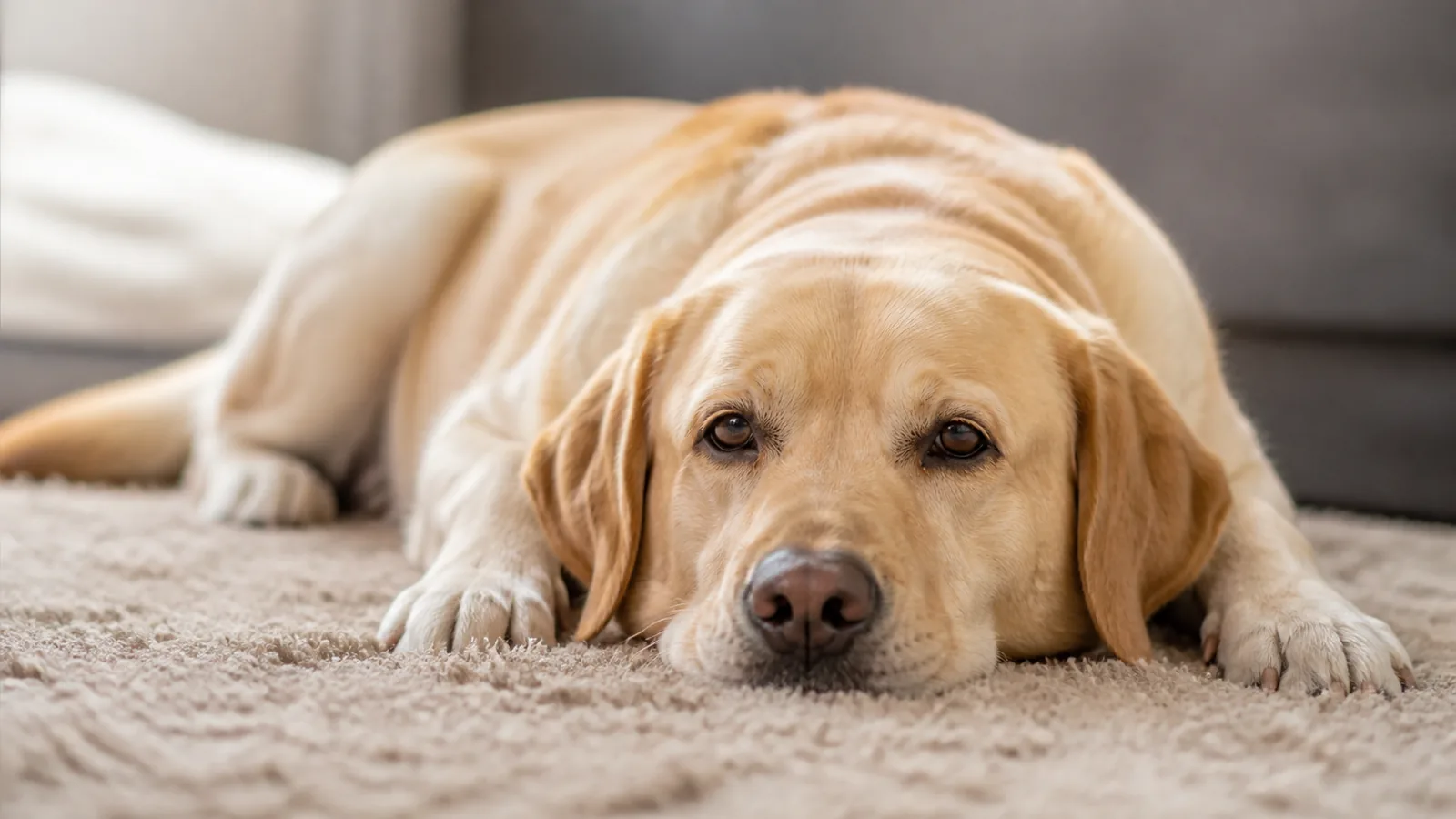
Hip pain that keeps coming back does not automatically mean your pet needs surgery, but it is a sign that the current plan has stopped working. Most dogs and cats with hip dysplasia, arthritis, or an old joint injury start with weight control, supplements, pain medication, and rehabilitation, and many stay comfortable that way for years. Surgery enters the conversation when pain breaks through that care and your pet is losing muscle, mobility, and interest in normal activity. Different procedures are available that can return your pet to comfortable movement, or even prevent future hip problems in puppies. Which procedure fits depends on your pet's size, age, the underlying cause, and how far the joint has changed, and the answer often looks different for a big dog than for a cat.
At Mid-Valley Veterinary Hospital in Orland, a recurring hip problem begins with a hands-on orthopedic exam and digital X-rays, so we can see what is happening inside the joint before anyone raises surgery. Our pain management approach includes Librela for dogs, Solensia for cats, oral medications, and Class IV laser therapy to bring inflammation down. When that is no longer enough, we talk through which operation fits and where it should happen: some orthopedic procedures are performed at our hospital with a visiting surgeon, while some are referred to a specialty center, and we handle the workup and the recovery care on this end. If your pet keeps improving and then sliding backward, schedule an exam with us so we can see where the joint stands and what should change.
Sorting Out Hip Surgery Options
- A hip that changed overnight after a fall needs to be seen that day, while a hip that's been stiffening for months needs an exam in the next week or two.
- An FHO removes the ball of the hip and lets scar tissue build a false joint, which works best for cats and for lighter, well-muscled dogs.
- A total hip replacement swaps both halves of the joint for implants and restores near-normal mechanics, which usually makes it the better fit for large or athletic dogs.
- Puppies from high-risk breeds have preventive options that expire, so hips checked at four to six months open doors that are closed by the time a dog is four.
When Does a Sore Hip Stop Being Something to Watch?
A hip that's been stiffening for months and a hip that changed overnight are two different problems. Sudden refusal to bear weight after a fall or a car strike needs to be seen that day. Slower changes, like a dog who sits down partway through a walk or a cat who quit jumping to the counter, deserve an exam in the next week or two.
Dogs tend to be obvious about it. Bunny hopping with both back legs together, a hitch getting up off a slick kitchen floor, a narrow stance behind, thigh muscle thinned on one side: those are the classics. Cats hide it instead. A cat with sore hips picks lower places to sleep, lands short on a jump she used to clear, and stops grooming the fur over her back end because twisting that way hurts.
Two things make a sore hip worse while you wait for that appointment. Never give human pain medication: ibuprofen, naproxen, and acetaminophen cause serious harm in dogs, and acetaminophen can kill a cat at a single tablet. And don't try to walk the stiffness out with a long weekend hike, since an inflamed joint answers that with a worse Monday.
What Conditions Actually Lead to Hip Surgery in Dogs and Cats?
Four problems send most pets down this road: hip dysplasia, a hip that has luxated out of its socket, Legg-Perthes disease in young small-breed dogs and cats, and end-stage arthritis. Not every sore back end is a hip, though. A torn cruciate ligament in the knee, arthritis low in the spine, and bone tumors in older large-breed dogs all produce a similar hind-end limp, which is one reason the exam and the X-rays come before any surgical plan.
Hip dysplasia: Canine hip dysplasia starts as a loose fit between the ball and the socket, and that looseness slowly grinds the joint into arthritis, which is why Labradors, German Shepherds, Golden Retrievers, and Rottweilers show up in this conversation so often. Feline hip dysplasia gets missed because cats almost never limp, so it usually surfaces as stiffness after a nap and a cat who has turned grumpy about being lifted. For at-risk breeds, hip dysplasia screening grades the joint on radiographs and puts a number on something you can't see from across the room, often years before a dog is visibly sore.
Hip luxation: Hip luxation is the femoral head coming out of the socket entirely, most often after a car strike or a hard fall, and pets whose sockets were already shallow from dysplasia are the ones most likely to pop back out after the hip is put back in place. Replacing the joint by hand under anesthesia is worth trying first, and when it keeps slipping, an operation is what holds it.
Legg-Perthes disease: Legg-Perthes disease cuts off blood supply to the femoral head so the bone crumbles from the inside, and it turns up in small-breed dogs and the occasional cat between roughly five and eight months old, usually as a young pet who suddenly starts carrying one back leg. Once that bone has collapsed, taking it out is what ends the pain, and these young patients tend to bounce back beautifully.
Advanced arthritis: Osteoarthritis in dogs and cats is where untreated hip disease eventually lands. When a full medical plan no longer buys a comfortable day, the joint itself becomes the thing to fix.
Can Hip Pain Be Managed Without Surgery?
Plenty of dogs and cats stay comfortable for years without an operation, as long as the plan runs on several tracks at once. Any one piece by itself tends to disappoint.
Weight is the lever with the most force behind it, and it costs nothing. Every extra pound presses on a joint that's already grinding, and a lean pet usually needs less medication to reach the same good day.
Drug options have improved a lot recently. Librela for dogs and Solensia for cats are monthly injections that interrupt a specific pain signal, and for many arthritic pets they change their quality of life in a big way. Oral anti-inflammatories, gabapentin, and Class IV laser therapy fill in around them.
Joint supplements are one layer of a plan rather than a fix on their own, with omega-3 fatty acids carrying the strongest support behind them and several weeks of consistent dosing needed before anything changes. Veterinary physical rehabilitation builds the muscle that holds a bad hip together, using targeted strengthening, controlled exercise, and hydrotherapy instead of crate rest and hope.
At home, the unglamorous fixes matter most: runners over slick floors, a ramp instead of a leap into the truck bed, a litter box with one low side, and food, water, and a bed on the ground floor.
What Is an FHO, and Which Pets Do Best With One?
A femoral head ostectomy takes the ball of the hip out entirely, and the body fills that space with scar tissue that works as a false joint. Bone no longer grinds on bone, so the source of pain is gone. The trade is mechanical: a slightly shorter stride and a little less reach on that side.
Body weight decides most of it. Cats of nearly any size, small and medium dogs, and young pets whose femoral heads have crumbled do very well, because a false joint holds up best with muscle around it and not much load on it. It's also the right call when a replacement isn't feasible, as with an infected or shattered joint.
Recovery is where an FHO is won or lost, and rehabilitation isn't optional here. Short controlled leash walks start within days, along with standing work and gentle range of motion, because the muscle built around that false joint is what makes it function. Most pets use the leg within a couple of weeks and move well by two to three months. Cats need to be kept contained for a while, since a cat who feels better on day five will try the top of the bookcase on day six.
Is a Total Hip Replacement Worth It for a Big Dog?
For a large or athletic dog whose joint is destroyed, it usually is. Total hip replacement swaps out both halves of the joint, pairing a prosthetic femoral head with a new socket, and it restores near-normal mechanics in well over 90 percent of the patients who are good candidates for it.
The candidates are easy to picture: a working dog, a hiking partner, a young Lab whose hips failed at two, or any dog heavy enough that a false joint would be asked to carry more than scar tissue can. Cats can have hip replacements too, at specialty centers with feline-sized implants, though it stays a rarer conversation than an FHO. A replacement is referred out to a specialty surgical center, where the implants and the equipment live. We do the workup, set up the referral, and take the follow-up care back once your pet comes home.
Strict rest is the price of that result. Eight to twelve weeks of leash-only trips outside, no stairs, no running, no jumping, while bone grows into the implant and soft tissue heals. That restriction is also what protects against the complications that matter most with an implant, including dislocation, infection, and loosening, any of which can mean a second surgery. Cats need their vertical world closed off for the same stretch: beds lowered, counters blocked, one quiet room instead of the whole house. Most dogs return to full activity around three to four months, and many families say the dog moves better than they've seen in years.
How Do You Choose Between an FHO and a Total Hip Replacement?
Weight, age, and the job the hip has to do settle this more often than anything else. An FHO trades perfect mechanics for dependable comfort on a shorter, simpler road. A replacement rebuilds the joint properly and asks for referral, an implant, and a much stricter recovery in exchange.
| Question | FHO | Total hip replacement |
| What happens to the joint | The femoral head comes out, scar tissue forms a false joint | Both halves are replaced with implants |
| Best suited to | Cats, small and medium dogs, well muscled pets | Large, heavy, or athletic dogs, and some cats at specialty centers |
| Recovery | Motion encouraged early, rehabilitation starts within days | Strict restriction for 8 to 12 weeks |
| Long term function | Comfortable, often with a slightly altered gait | Near normal, including for working dogs |
| Where it happens | At our hospital with a visiting orthopedic surgeon | Referred to a specialty surgical center |
| Relative cost | Lower | Higher, reflecting the implant and specialty care |
Picking one usually doesn't close the door on the other. A hip that had a femoral head removed can sometimes still be converted to a replacement later if function falls short, though that's a harder operation than starting there.
Should a Puppy Be X-rayed for Hip Dysplasia Before Anything Hurts?
For a large-breed puppy, or one whose parents were never screened, the answer leans yes. Hip dysplasia treatment options are at their widest before arthritis sets in, which is why an X-ray at four or six months old is worth far more than the identical X-ray at four years old.
Breed is the first flag, and so is a fast-growing puppy already outsizing the breeder's estimates. Bunny hopping at play, a sloppy sideways sit, or tiring early on short walks are worth mentioning even when everything else looks fine. Plenty of families ask simply because they want to know, which is a good enough reason. We build an orthopedic check into puppy wellness exams, and digital X-rays are taken right here in Orland.
What Should a Large-Breed Puppy Eat to Protect Their Hips?
Developmental orthopedic conditions track closely with how fast a large-breed puppy grows, so a large-breed puppy formula with controlled calcium, measured meals, and a lean body condition through that first year does more for a hip than any supplement will. Free-choice feeding a Great Dane puppy is one of the more reliable ways to end up in this conversation. Ribs you can feel without pressing, kept that way into adulthood, beat anything in a jar. Kittens are far lower risk, though the same lean habit serves them for life.
Are There Surgeries That Head Off Hip Dysplasia in Young Dogs?
Juvenile pubic symphysiodesis is a short, minimally invasive procedure with a hard deadline of roughly 12 to 20 weeks of age, closing part of the pelvic growth plate so the sockets rotate to cover the femoral heads more deeply as the puppy finishes growing. The other option is a pelvic osteotomy, double or triple, which cuts and rotates the pelvis to deepen its grip on the ball before arthritis has taken hold.
| Procedure | Timing window | What it does |
| Juvenile pubic symphysiodesis (JPS) | About 12 to 20 weeks old | Redirects pelvic growth so the sockets cover the ball better |
| Double or triple pelvic osteotomy (DPO/TPO) | Roughly 5 to 10 months, before arthritis | Rotates the pelvis to deepen coverage of an already loose hip |
Both go to a specialty surgeon, and both windows close on their own schedule. By the time a dog is limping at three, they're long gone.
How Will We Figure Out What's Right for Your Pet?
It starts with hands on the hips and a clear picture of the joint. An orthopedic exam shows where the pain lives, how much muscle has been lost, and how loose things feel, while radiographs show what the cartilage and bone have become. Sedation is often part of getting a diagnostic view.
In-house diagnostics mean the images and the pre-anesthetic bloodwork happen at one visit, so the conversation about options can start while you're still in the room. What helps most is seeing the joint, hearing what each path asks of your household for the next three months, and being honest about what your pet's days should feel like a year from now. The doctors who know your pet can lay that out plainly, arrange the referral when a specialty center is the right place, and pick the rehabilitation back up here.
Frequently Asked Questions About Hip Surgery in Dogs and Cats
Can both hips be done, or just the bad one?
Both can be addressed when both are painful, and they're nearly always staged rather than done together. Many dogs with dysplasia on both sides only ever need one hip operated on, because the other side carries them fine once the worst joint stops hurting. When the second one does need attention, waiting until the first has healed and rebuilt muscle gives your dog a strong leg to stand on through the next recovery.
Is my pet too old for hip surgery?
Age on its own rarely rules it out. Heart, kidney, and liver function, body condition, and whether there's still muscle left to rebuild matter far more, which is why bloodwork and a careful exam come before any anesthesia decision. A comfortable 10-year-old with one wrecked joint can be a better candidate than a 5-year-old with untreated organ disease. Muscle loss is the clock worth watching, not the birthday.
What if an operation isn't in the cards for us?
Comfort is still very much reachable. A committed medical plan keeps many pets moving well for a long time: monthly injectable pain control, oral medication, weight loss, home exercises, traction on slick floors, and regular rechecks. We'd rather talk about how your pet's days are going than push a procedure that doesn't fit your household.
Getting Your Pet Back to Comfortable Movement
Hip decisions almost never have to be made this week. What they do need is a clear look at the joint, an honest read on what the pain is costing your dog or cat, and someone who'll talk through the trade-offs without steering you. If your pet keeps improving and then sliding backward on the plan you're using now, schedule an orthopedic exam at Mid-Valley Veterinary Hospital in Orland and we'll see where things stand.