Reward-based training and punishment do not produce the same puppy or kitten, and only the first prevents the anxiety behind most adult behavior problems. Earning something good for getting it right builds confidence and makes your pet more willing to try unfamiliar things. Corrections like prong collars, spray bottles, and scruffing usually stop a behavior in the moment while teaching your pet that hands, strangers, or whatever already worried them predicts something unpleasant. That difference shows up years later in how your dog greets a visitor and whether your cat disappears when the carrier comes out.
Around Orland, a puppy runs into livestock, tractors, bikes, and strangers at the gate at an early age, and how those first introductions go tends to stick. Mid-Valley Veterinary Hospital is with your pet through the months when that is being set, and behavior consultations are part of our puppy and kitten wellness visits. Tell us what is happening at home and we can help you judge whether a class or a trainer is a good fit, and we handle young animals gently here so a vet visit stays one of the easy parts. If you have a new puppy or kitten, ask us what to start with.
Preventing Anxiety in Young Pets: The Basics
- Reward-based methods build a pet who's willing to try things; corrections built on pain or startle quiet the behavior and leave the fear running underneath.
- Both species get a short early window when the world gets sorted into safe and not safe, and a kitten's closes sooner than a puppy's.
- Until the vaccine series is done, introductions belong in places you control, around adult dogs you know are vaccinated, and never at dog parks or on the grass outside the feed store, where parvovirus can linger in the soil.
- Any quick change in behavior deserves a medical exam before a training plan: pain, hormone shifts, and fading senses often look like a behavior problem first.
What Does a Vet Visit Have to Do With Preventing Anxiety?
A young animal's first appointments teach them what human hands mean, so we keep those visits short, gentle, and full of food. For cats especially, the vet visit begins at home, with paw handling and short carrier sessions practiced weeks before the appointment.
Cooperative care means training a pet to take part in handling instead of being held down for it. Touch an ear, feed a treat. A few rounds a week at the kitchen table builds a kitten who tolerates a gum check and a puppy who hands over a foot, and it makes our examinations far easier. The same practice carries over to the brush and the nail trimmers. The alternative is a pet who needs to be sedated for basic health care, driving up your costs and turning what should be an easy visit into a big event.
Why Do Corrections Backfire on an Anxious Pet?
Corrections backfire because pain, startle, and intimidation suppress the behavior while leaving the fear that caused it intact. Nothing in that lesson tells your pet what to do instead. Positive training pays the behavior you want often enough that your pet starts offering it without being asked.
| Outcome | Reward-based training | Corrections and aversives |
| What your pet learns | Trying something new tends to pay off | Hands, strangers, or the trigger predict something unpleasant |
| What you see this week | More offering, quicker learning, a pet who wants to work | The behavior often stops, sometimes right away |
| What you see in a year | A dog who checks in when unsure, a cat who tolerates handling | Avoidance, flinching, or a pet who skips the warning |
| What it means for an exam | Takes treats, lets us examine and vaccinate | May need sedation for routine handling |
What Should a Puppy or Kitten Meet, and How Soon?
Early socialization runs on a biological clock that closes earlier in kittens, around seven to nine weeks of age, than in puppies, where the window tapers off closer to fourteen weeks. Whatever a young animal meets during that stretch, in small and pleasant doses, tends to get filed as ordinary. Learning doesn't stop when the window closes, but new things stop registering as safe on their own and need slow introductions at a distance your pet can handle.
A nine-week-old puppy meets the neighbor's cattle and takes it in stride, while a two-year-old needs weeks of patient work to walk past the same fence line. Volume isn't the point: one calm meeting with a quiet toddler beats ten minutes trapped in a loud room full of strangers, and your pet should get to pick how close they come while good things keep happening. Avoid overwhelming them; the goal is learning that something new isn’t scary. The targets worth covering while the window is open:
- People: children, men in hats and beards, neighbors in boots and coveralls, and anyone using a walker or a wheelchair.
- Animals: calm vaccinated adult dogs, a tolerant housecat, and the cattle, goats, or chickens they'll live beside, watched from a safe distance.
- Surfaces and sounds: gravel, metal grating, wet grass, a wobbly board, a slick countertop. Tractors, ATVs, the shop vacuum, and storm or firework recordings played low belong on the list too.
- Handling: feet, ears, mouth, tail, belly, and being held still for a few seconds at a time.
- Veterinary-type experiences: the carrier, the truck, a short wait in a lobby, and a stranger in scrubs offering chicken.
Kittens do most of this indoors, where their whole world is whoever walks through the front door. Ask visitors to sit on the floor and toss treats, let several sets of hands do the handling practice, and run the vacuum while something good happens in the next room. Taking a kitten out on errands the way you would a puppy tends to backfire.
Where Can a Puppy Go Before Their Shots Are Finished?
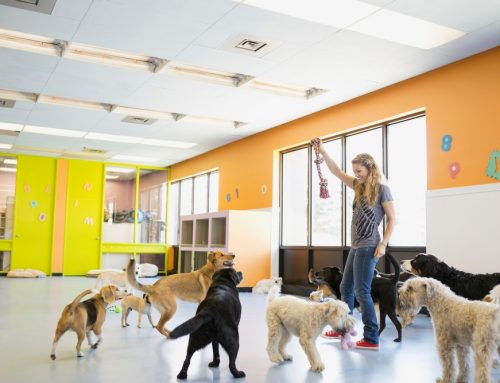
Puppy classes can start about a week after a puppy's first set of vaccines rather than waiting out the full series, because veterinary behavior specialists find that behavior problems end more young dogs' lives than infectious disease does. What keeps that safe is where you go: a clean indoor class, a friend's fenced yard with adult dogs you know are vaccinated, or the tailgate of your own truck.
Parvovirus stays infectious in dirt for as long as a year, so dog parks, the grass outside the feed store, highway rest stops, and pet store floors all carry real risk for a puppy who hasn't finished their shots. Where your puppy sits in their vaccination schedule shapes what we'd suggest, so bring it up at the next appointment.
Carrier Training for Cats, Leash Training for Puppies
Carrier training works best when the carrier lives out as furniture year round, door off, soft bedding inside, with treats appearing in it at random times so the box stops predicting a car ride. Feed meals in there, shut the door for a few seconds at a time, and take short drives that end back in your own driveway instead of always at ours.
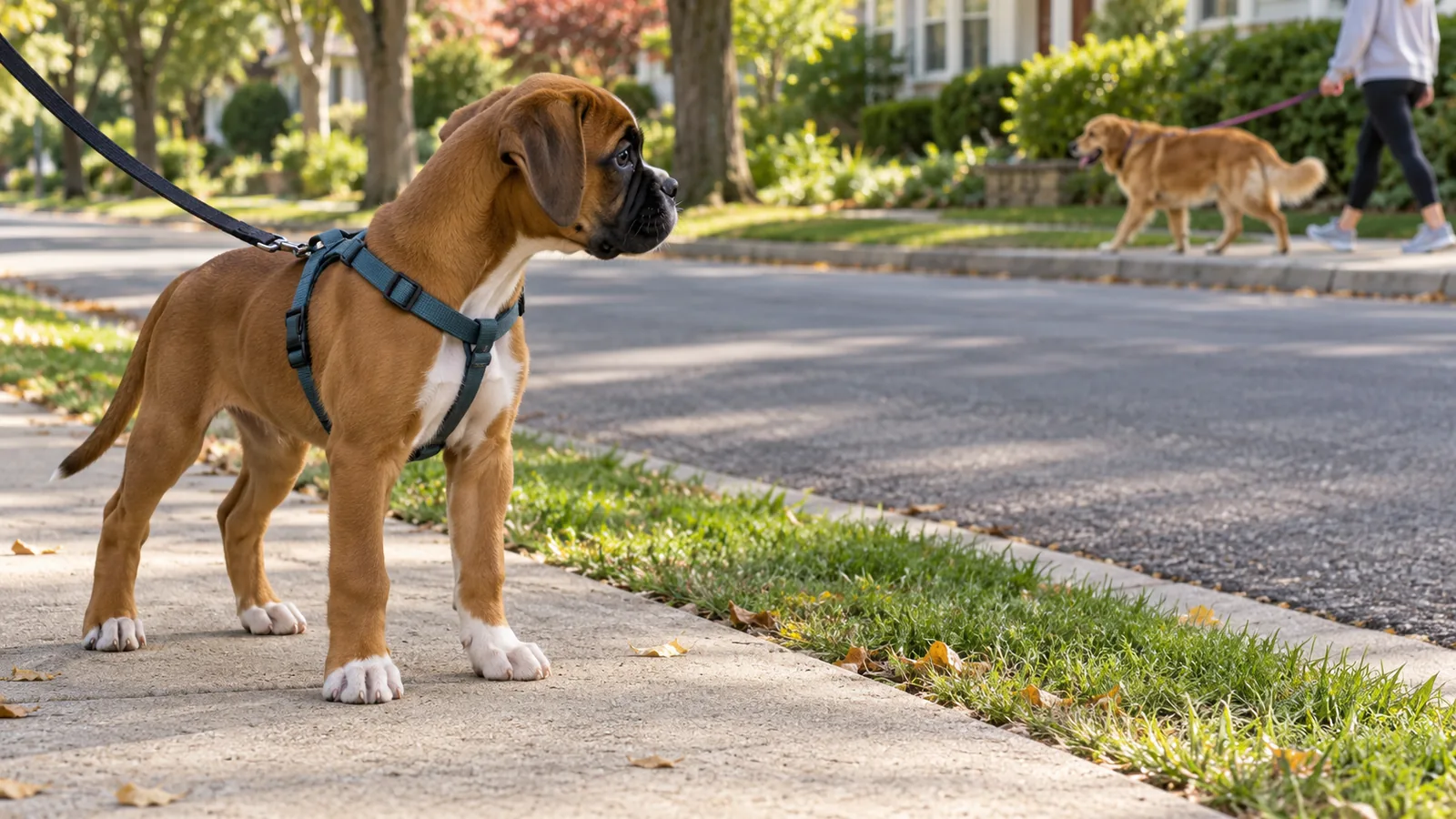
Leashes work the same way. Pay for the position you want with a treat down by your knee every few steps, before pulling becomes the habit. When the leash tightens, stop walking; when it goes slack, pay and move on. A front-clip harness takes the pressure off your puppy's neck while that lesson sinks in. Learning good behavior on leash in a boring place, before they see their first squirrel at the park, pays dividends.
Tractors, Bikes, and Anything With Wheels
Fast wheels can trigger a chase response in a dog who has never seen them. A puppy who watches cyclists, skateboards, and strollers roll past from a comfortable distance while good things happen grows into a dog who barely looks up. Around Orland the list also includes the tractor, the ATV, the feed truck, and a loaded wheelbarrow. Begin at whatever distance lets your puppy keep eating, then close the gap over days.
How Do I Tell When My Pet Is Getting Overwhelmed?
A dog who licks their lips, yawns when they aren't tired, turns their head away, or shows a crescent of white at the eye corner is already asking for space, and canine body language like that arrives well before a growl. Cats go quiet and still first, which is easy to mistake for a cat who is fine.
Discomfort climbs a ladder, and a pet who can't get relief at the bottom rung keeps moving up: stillness, then turning away, then a hard stare, then a growl or hiss, then teeth. Cats climb the same ladder more softly, with a tail that starts thrashing, skin rippling along the back, whiskers pinned forward, then a sudden limpness that is not relaxation. Side by side, a confident young animal and a worried one look like this:
| Signal | Confident | Worried |
| Dog's posture | Loose and wiggly, weight forward, bouncing back for more | Crouched low, weight back, leaning away |
| Dog's tail | Sweeping wag at mid height | Tucked under, or stiff and high with a fast tick |
| Cat's body | Tail up on approach, slow blinks, cheek rubbing the furniture | Pressed under the bed, tail wrapped tight, ears flat |
| Meeting something new | Investigates, then returns to check in | Freezes, retreats, or stops taking food |
| After a startle | Shakes it off and re-engages in seconds | Tense for several minutes, avoids that spot later |
Punishing a warning makes this worse. Correct a growl enough times and the growl disappears, but the fear stays put and so does the bite that used to follow it. Those early cues are what our team reads during an appointment, and we'll slow down, switch tactics, or finish a nail trim another day rather than push a frightened kitten through it.
What Adult Problems Start as Puppy or Kitten Fear?
The behaviors families call us about years later start as ordinary fear nobody interrupted in time, and each one has a prevention step that works far better at twelve weeks than retraining does at three years.
- Reactivity: lunging and barking at the end of a leash looks like aggression, but reactive behavior is usually a dog trying to make something frightening move further away. Prevention is distance plus good associations: the second your puppy notices another dog, mark it and pay well for looking back at you.
- Resource guarding: the trade game teaches a puppy that an approaching hand brings something better than whatever they have. Reaching into their bowl teaches the opposite, so walk past and drop something tastier in instead.
- Separation anxiety: chewing aimed at doors and windows, howling, pacing, or house soiling that happens only when your pet is alone is separation anxiety rather than spite, so punishing the mess you come home to only adds fear. Train independence from the first week home: step outside for a minute and come back before anyone worries, feed some meals in a pen or a closed room, and resist holding a new puppy or kitten every waking hour.
- Noise fear: play recordings of storms, fireworks, and gunfire at a volume your pet can eat through, well ahead of the Fourth of July, and raise it only while they keep eating. Let them use the closet or the bathtub if that's where they feel safe, stay matter of fact about the noise yourself, and skip the scolding.
- Tension between housemates: tension among cats usually traces back to competition over something countable, and dogs share the pattern. Food bowls, water, litter boxes, resting spots, and high perches need enough separate locations that no pet has to walk past another to reach one, and cats also need height, which a cleared bookcase top covers cheaply.
Can Boredom Turn Into Anxiety?
Boredom can look a lot like anxiety, because instincts that never get a job come out as chewed baseboards, pacing, barking at nothing, or a cat yowling at three in the morning. Mental work tires a pet out more than exercise alone, and it costs almost nothing:
- Dogs: dog enrichment can be a handful of kibble scattered in the grass, a cardboard box to shred, or a muffin tin with treats hidden under tennis balls.
- Cats: cats need to hunt, climb, and scratch, which a wand toy session ending in a meal covers, along with a window perch, a cardboard scratcher, and dinner out of a food puzzle instead of a bowl.
A pet who panics rather than frets, during fireworks or when left alone, usually needs prescription medication alongside that training, so tell us what you're seeing and we'll help you sort out which one fits.
Routines Through Harvest and the Holidays
A pet who can predict their day has less to brace for, and meals, play, and a clean litter box at roughly the same points in the day do most of that work for a cat. When the schedule breaks, hold the anchors steady: same feeding spot, same box locations, same evening play session, even if the clock slides an hour. Dogs do better with a few fixed points too.
What If My Pet's Behavior Changes Suddenly?
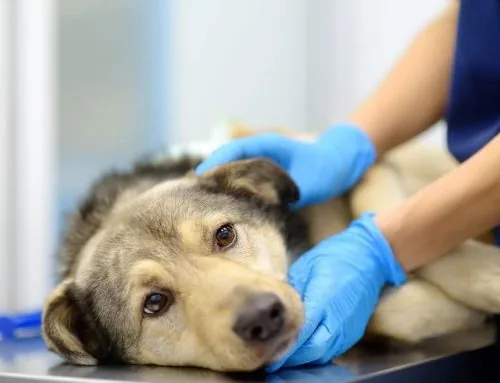
A behavior that changes quickly in a pet who seemed fine last month is a medical question first. Pain, fading eyesight or hearing, thyroid and other hormone shifts, and neurological changes all come out as irritability, hiding, house soiling, or a new objection to being touched.
At any age, a dog who won't jump into the truck anymore isn't being stubborn, and a cat who starts urinating beside the box may have a bladder problem rather than an attitude. An exam paired with bloodwork and X-rays often turns up the sore hip, the painful tooth, or the hormone change behind it, and treating that usually fixes the behavior. Call us when the change starts, and we’ll go through both medical and behavioral causes.
What Puppy Owners Ask Us About Socializing
My puppy is four months old already. Did we miss our chance?
The early window gives the best return, but it isn't a hard cutoff. Older puppies and adult pets keep learning through desensitization, which means gradual exposure at a distance they can handle: start farther away, keep sessions short, pay generously, and stop before your pet gets worried. Tell us what your dog struggles with and we'll help you decide between a group class and a private trainer.
Should I let my puppy greet every dog we pass?
Greeting everybody isn't the goal. Plenty of adult dogs have no interest in a bouncy puppy, and one hard correction from a stranger's dog can undo weeks of work. Pick calm, vaccinated, puppy-tolerant dogs you know, keep hellos brief, and let your puppy walk away when they're finished. Watching other dogs go by from a comfortable distance while eating treats counts too.
Where do I find a good puppy class around here?
Classes come and go between Orland and Chico, so ask us what's running right now, and we'll tell you which options use reward-based methods and which facilities we recommend. Worth asking any class: how are dogs separated by size and confidence, and what happens when a puppy gets scared?
Building a Confident Puppy or Kitten in Orland
A puppy or kitten who takes the tractor in the next field, the delivery truck at the gate, and the calves across the fence in small, early doses tends to grow into the pet who sleeps through fireworks and rides along to Chico without a fuss.
Mid-Valley Veterinary Hospital sees puppies and kittens through those months, and no question about chewing, hiding, or whether a class is worth it is too small to bring up. Schedule a puppy or kitten wellness visit and we'll build the plan around your pet and lifestyle.